Case study
Custom Booking Platform
PlazaCubes — flex-space operator, Düsseldorf
OfficeRnD / Booking / Payments / Multi-location
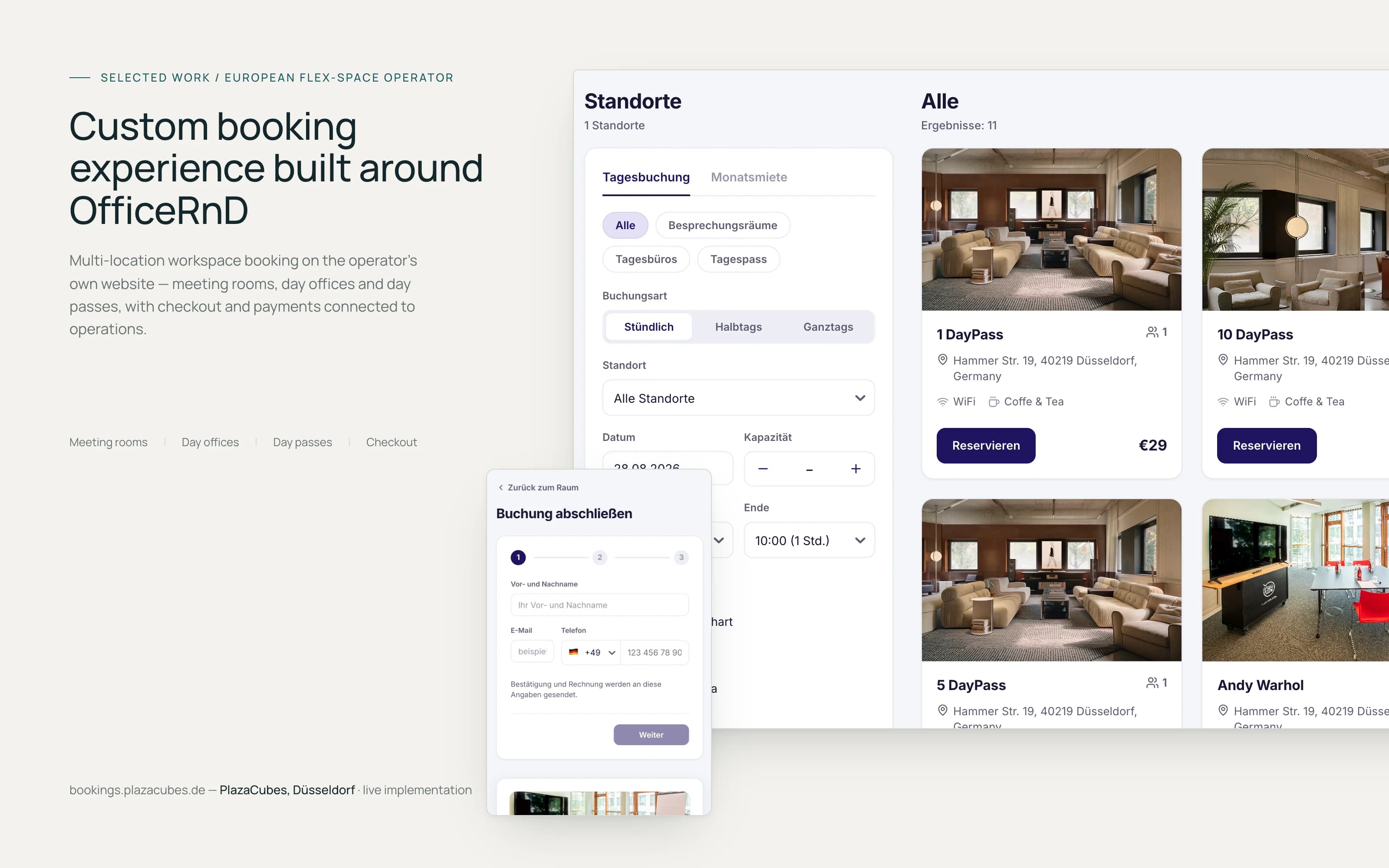
A public booking website that carries the full journey for meeting rooms, day offices and day passes — discovery, live availability, pricing and checkout — with OfficeRnD kept at the centre of operations through a dedicated application layer.
- Client
- PlazaCubes, Düsseldorf
- Role
- Custom development
- Platform
- OfficeRnD
- Scope
- Booking / Payments / Middleware
- Market
- Germany / Europe
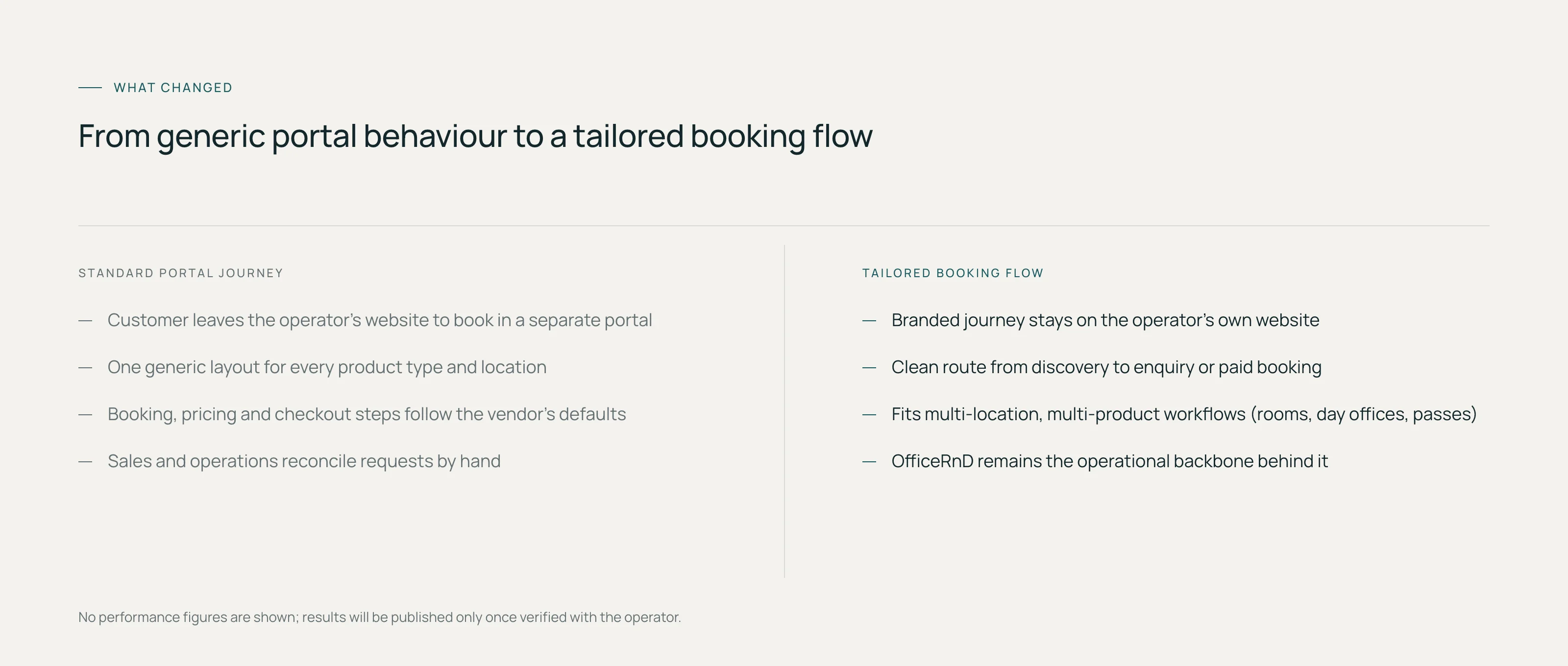
The situation
What we changed
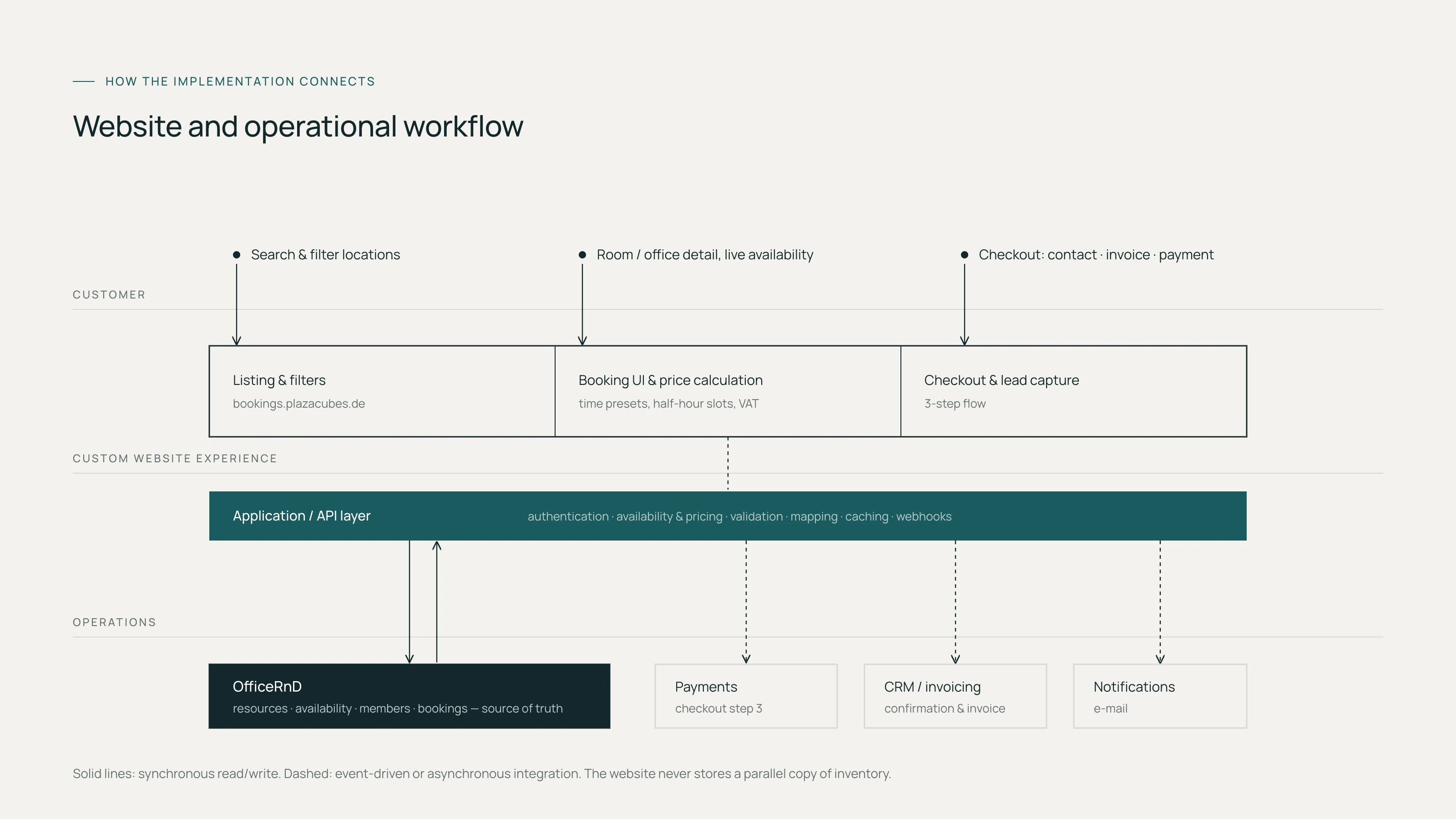
We built a custom booking website connected to OfficeRnD, allowing the public-facing site and the operational platform to work together without forcing customers into a disconnected journey. An application / API layer handles the communication with OfficeRnD and the surrounding services.
What connects behind the scenes
The website reads availability and pricing through the application layer and writes bookings back to OfficeRnD. Payments, invoicing and notifications hang off the same layer, so the frontend never talks to third-party APIs directly.
What we built
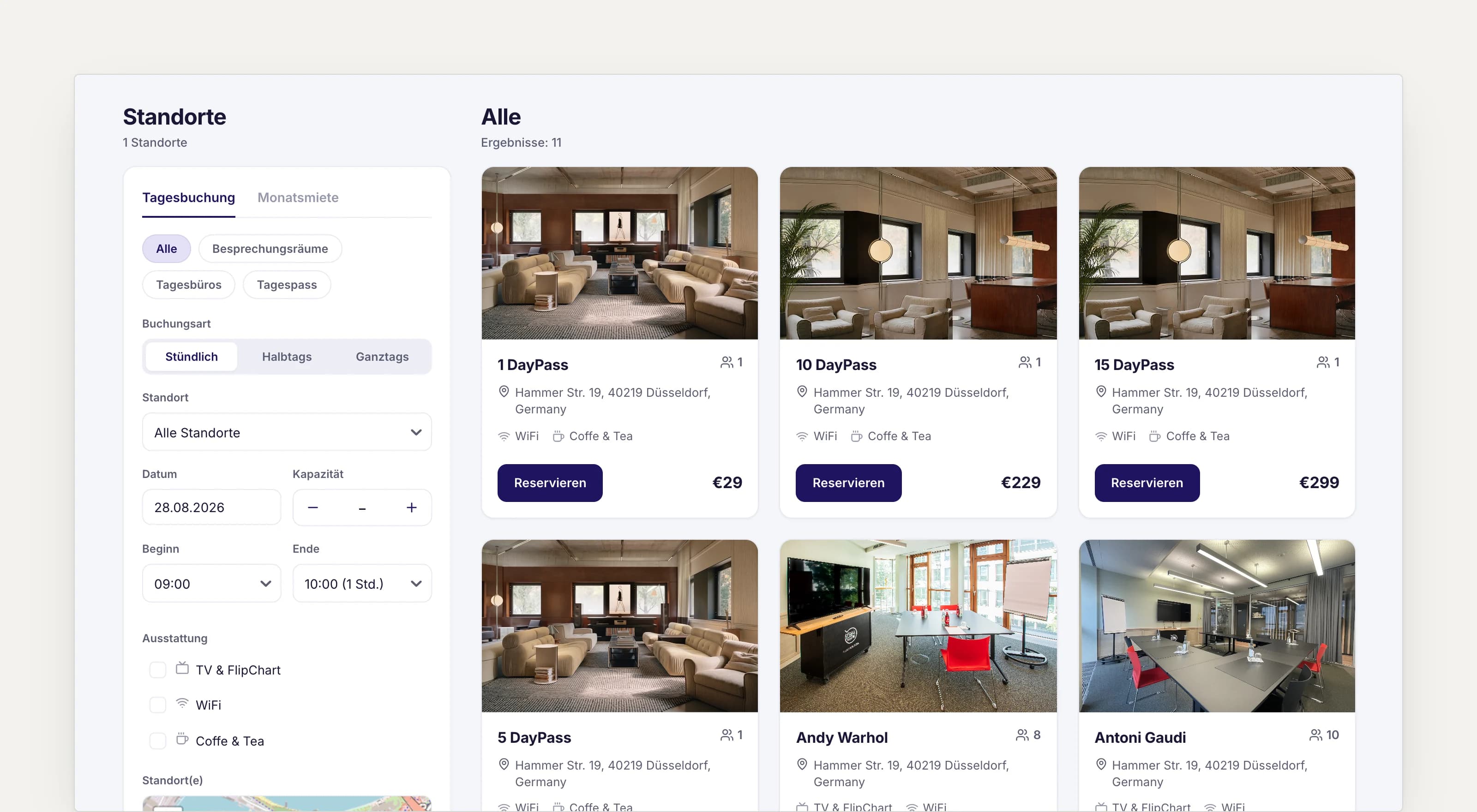
- Listing and location page driven by OfficeRnD resources, with filters for booking type, date, time, capacity and amenities
- Meeting room, day office and day pass products in one browsing experience
- Room detail with calendar, time presets and half-hour slots reflecting live availability
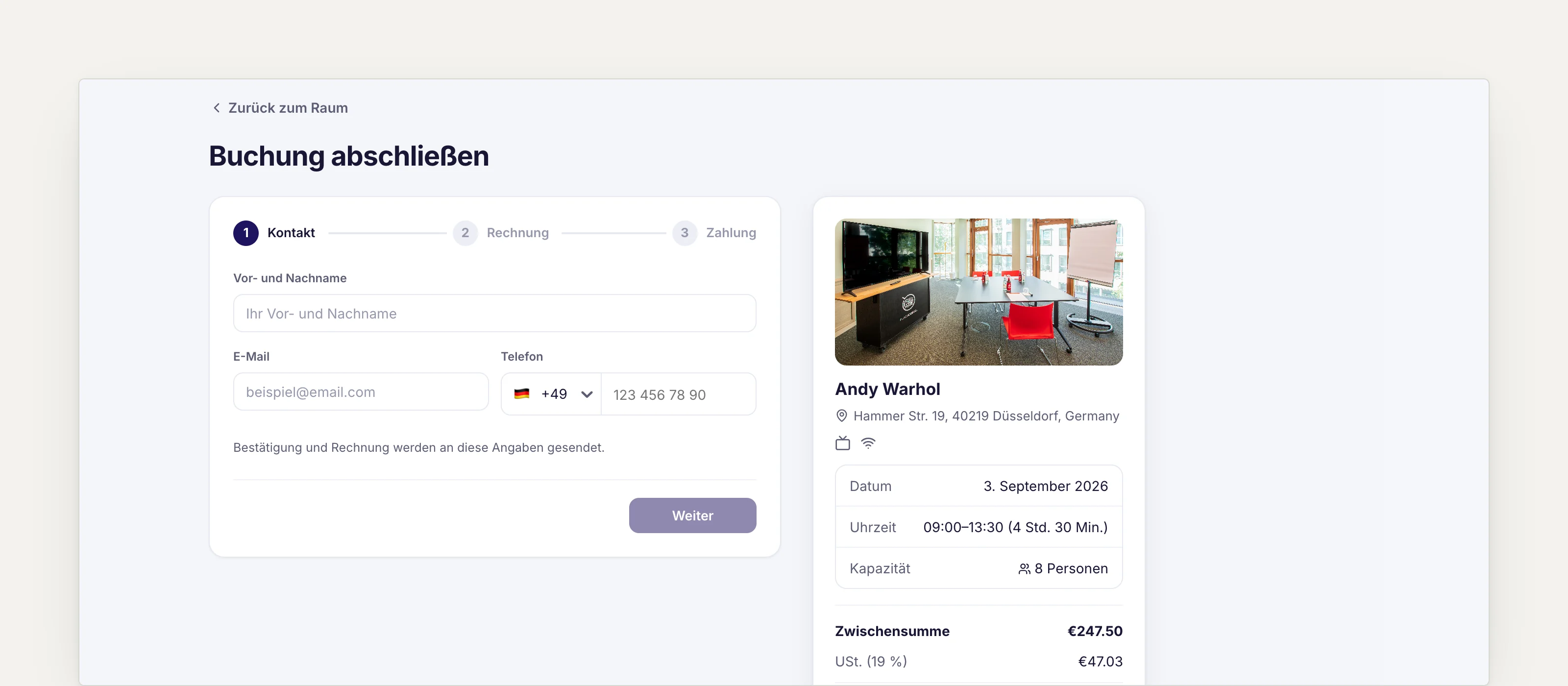
- Live price calculation including VAT, half-day and full-day tariffs
- Three-step checkout — contact, invoice details, payment — on the operator's own domain
- Application / API layer between the website and OfficeRnD
- Multi-language ready frontend architecture; production deployment and monitoring
Technical considerations
- OfficeRnD as source of truth
- Resources, availability, members and bookings are read from and written to OfficeRnD. The website never holds a parallel copy that can drift.
- Middleware instead of direct calls
- An application layer handles authentication, availability and pricing, validation, mapping and caching, so the frontend stays simple and API changes are isolated.
- Sales process first
- The booking and checkout flow was designed around how the operator actually sells — not around the default portal steps.
- Built to extend
- New locations, products and languages can be added without rebuilding the customer journey.
The result
The final architecture keeps the operator's branded customer journey on the public website while OfficeRnD remains connected to the underlying operational workflow.